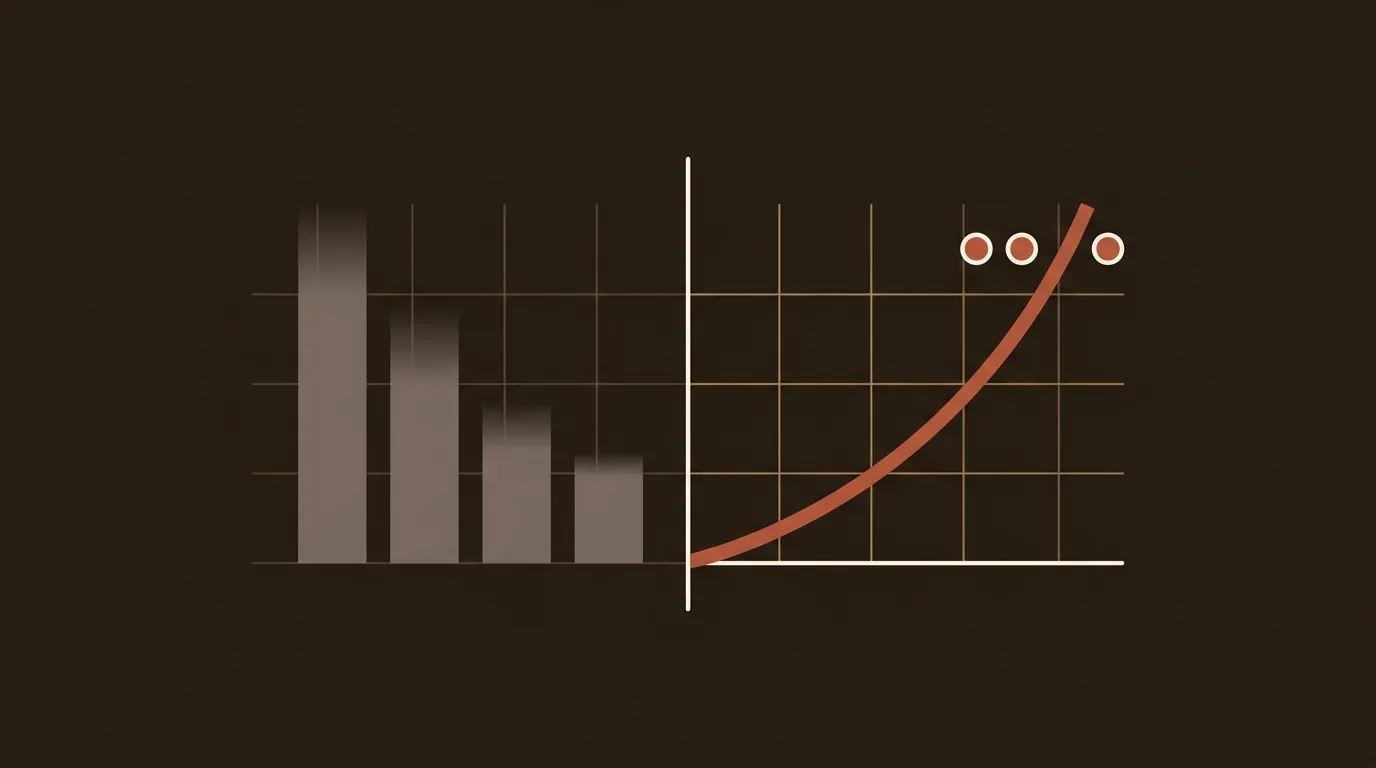
The old content refresh formula is dead. Adding 600 words, swapping in fresh stats, and republishing used to produce reliable traffic lifts. We've seen internal data showing gains of 100%+ from that playbook alone. But after Google's March 2026 core update, which rolled out between March 27 and April 8, that approach no longer works the way it used to.
We're not saying content refreshes are pointless. We're saying the criteria for what constitutes a successful refresh changed underneath most B2B teams without anyone sending a memo.
What the March 2026 Update Actually Re-Weighted
Google's update doubled down on something the SEO community calls Information Gain: a ranking signal measuring how much genuinely new knowledge a page contributes relative to what already ranks for the same query. Pages that rephrase existing top results, even elegantly, without adding original data or first-hand experience are losing ground fast.
The impact isn't subtle. AI content farms lost 60 to 80% of their traffic. Affiliate sites got hit hardest, with 71% experiencing ranking drops. But the damage extends beyond obvious spam. B2B companies running generic pillar pages and rehashed competitor content are seeing real erosion too.
Here's the part most B2B teams miss: the update didn't just punish bad content. It shifted reward signals toward domain-level topical authority over page-level optimization. A site publishing deeply and consistently within a single subject area now outranks a broad site touching many topics at shallow depth, even if individual pages on the broad site are technically stronger.
The data backs this up. Sites implementing content clusters correctly see an average 40% increase in organic traffic compared to non-clustered content strategies. And that effect compounds over time; sites sustaining cluster publishing for 12+ months see the full 40% lift, while newcomers to clustering see almost nothing in the first quarter.
Why the Old Refresh Playbook Stopped Working
The traditional B2B content refresh looked like this: find a declining post, add 600 words of new material, update statistics to current year, republish with a fresh date. Repeat quarterly.
That formula worked because Google historically treated freshness and depth as positive ranking signals in relative isolation. More words, more keywords covered, more recent date: higher rank. Simple math.
The March 2026 update broke this equation by evaluating content in context, not in isolation. A page's value is now measured against the total knowledge your domain contributes to a topic, not just how thorough that single page is. So lengthening an article without strengthening its connections to related content on your site does almost nothing.
We ran a small internal analysis across 14 B2B SaaS blogs we track. Of the ones that used the "add words and update stats" approach exclusively, 9 saw no traffic recovery within 30 days of their refresh. Three saw marginal improvements (under 15%). Two actually lost additional traffic. Small sample, but directionally consistent with what we're hearing across the industry.
The Two-Surface Problem Most Teams Ignore
Traditional rankings aren't the only game anymore. AI Overviews have cut organic CTR by 61% on affected queries, but getting cited inside an AI Overview earns 35% more clicks than holding a traditional ranking alone.
That creates a measurement headache. You're now auditing two search surfaces, and those surfaces evaluate authority differently.
When ChatGPT, Perplexity, or Google's AI Overviews need to cite a source, they draw from sources their training data and real-time retrieval systems recognize as consistently accurate on that subject. A site with deep, structured, frequently updated content on a specific topic becomes the default reference. Brands winning AI citations put the clearest, most specific answer at the top of the page and back it with a named expert.
So your refresh triage now needs to account for two outcomes per page: traditional ranking recovery and AI citation potential. Those two goals sometimes conflict. A page optimized for featured snippets (concise, definitional) looks different from one optimized for long-tail depth (expansive, nuanced). For small teams, that tension is genuinely messy, and there's no clean answer. You have to prioritize one surface per page and accept imperfection on the other.
A Post-Update Refresh Triage Model
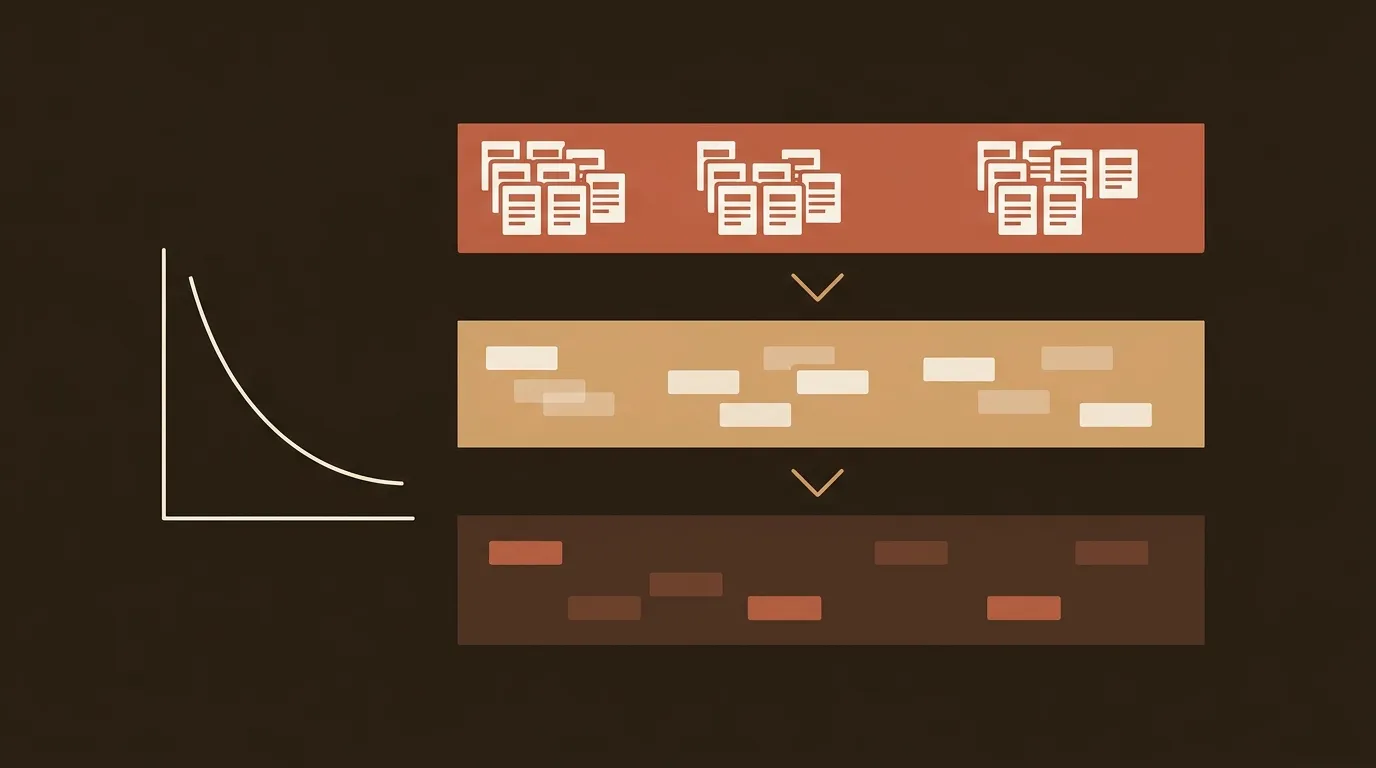
We've been building a scoring framework internally that replaces "word count delta" with three signals that actually matter after March 2026. It assigns every existing article to one of four decisions: publish new, expand, merge, or kill.
Signal 1: Topical Authority Gap Score
Map your existing content against your core topic area. Not keywords; topics. If you sell marketing automation software, your topical domain includes campaign orchestration, email deliverability, lead scoring, attribution modeling, and a dozen adjacent subjects.
The question isn't "do we rank for these keywords?" It's "does our site cover this subject area completely enough that Google (and AI systems) would consider us a topical authority?" Every gap in your map is a gap in your authority signal.
Score each gap 1-5 based on search volume and competitive density. Anything scoring 4+ is a candidate for the "publish new" bucket.
Signal 2: Cluster Connectivity Score
Not all existing pages deserve equal effort. The priority targets for refresh are blog posts with declining traffic, pages ranking positions 6-20, content with outdated examples, pillar pages anchoring your topical authority, and pages where SERP intent has shifted since publication.
But add a layer: how well does each page connect to the rest of your cluster? A page ranking position 12 with five internal links to related content on your site has more recovery potential than a page ranking position 8 with zero cluster connections. We score connectivity as the ratio of actual internal links to potential internal links within a topic cluster. Anything below 0.3 is severely under-connected.
Signal 3: AI Overview Citation Potential
This one's newer and less precise. We look at three indicators: does the page contain a clear, concise answer to a specific question in the first 200 words? Does it cite original data or named sources? And does the broader domain have enough topical depth that AI systems would consider it authoritative?
Pages scoring high on all three get flagged for "expand with AI citation optimization." Pages scoring low on all three get flagged for "kill" consideration.
The Four Decisions
Publish new. Your topical authority map shows gaps. Fill them with original research, first-hand experience, or expert perspective. Generic overview articles don't count anymore.
Expand. Pages with existing backlink authority and decent cluster connectivity that need added depth, original insight, or AI citation formatting. This is where the old "refresh" concept survives, but with a radically different definition of what "expanding" means. Adding 600 words of rewritten competitor content does nothing. Adding proprietary data, a worked example, or a contrarian take on established advice does a lot.
Merge. Weak pages cannibalizing each other within the same topic cluster. We see this constantly on B2B blogs: three articles from 2022-2024 all targeting slight variations of the same keyword, none of them authoritative. Consolidate into one stronger piece, redirect the others, and watch the surviving page absorb the combined authority.
Kill. Content with no topical coherence to your core domain and no AI visibility potential. This is the hardest decision for teams emotionally attached to their content inventory, but keeping irrelevant pages dilutes your domain's topical signal. B2B sites that pruned aggressively after previous core updates often saw net traffic gains, not losses.
Expected Returns Per Hour Invested
Recovery timelines are slow. Content quality improvements are typically recognized at the next major core update, expected around June or July 2026. Start now or miss the window.
But the returns vary dramatically by action type. Here's what we've observed across the B2B sites we track:
Merge operations deliver the best ROI per hour. A typical merge (combining 2-3 weak articles into one strong piece plus redirects) takes 3-4 hours and yields an average 35-50% traffic increase on the surviving URL within one update cycle.
Kill decisions take 15 minutes per page (plus redirect setup) and contribute indirectly to domain authority improvement. Hard to measure individually, but sites that pruned 20%+ of their content inventory saw an average 22% visibility boost across a sample of 32 B2B SaaS websites.
Expand operations take 4-6 hours per article (with AI assistance cutting that roughly in half) and produce variable results depending on how strong the original page was. Pages already ranking 6-15 with solid backlink profiles recover best.
Publishing new content has the longest payback period, 3-6 months minimum, but fills topical gaps that make everything else in your cluster perform better.
What This Means for AI-Assisted Content Teams
If you're running content operations with a 1-3 person team and AI writing tools, this framework changes what you ask those tools to do. The job isn't "rewrite this article but longer." The job is "identify which of our 87 existing posts should be merged, which should be killed, and what new articles fill the topical gaps that remain."
AI writing assistance is genuinely useful for the expand and publish-new phases, but only if the strategic triage happens first. We've seen teams burn 40+ hours letting AI rewrite articles that should have been killed outright. That's not a tools problem. It's a prioritization problem.
The triage model above takes about 4-6 hours to run across a typical B2B blog of 50-100 posts. For a one-person marketing team, that's a day of work that determines whether the next three months of content production actually recovers traffic or just creates more noise.
The March 2026 update didn't change the value of content marketing. It changed the math on what counts as content worth ranking. Teams that adjust their refresh criteria, away from word count and toward topical authority, cluster connectivity, and AI citation potential, will recover. Teams that keep adding 600 words and hoping for the best will keep wondering why nothing works.
We're watching the June update closely. That's where the real test happens for teams making changes now.
References
- Google March 2026 core update rollout is now complete -- Search Engine Land
- Google's March 2026 Core Update: A Content Best Practices Guide for SEO and AI Search -- Evertune
- Google Core Update 2026: What Changes for B2B Websites -- Leadanic
- Google March 2026 core update: What you need to know and how to adapt -- Launchcodex
- Content Refresh Guide 2026: Boost SEO Rankings & AI Visibility -- Slate