A two-person B2B content team publishing eight posts per month spends roughly 33% of its productive time on alignment and approval processes, according to Content Marketing Institute data from 2024. That's already painful. But here's what makes it worse: most of that alignment time assumes every post goes through the same workflow, the same optimization checklist, and the same success criteria. For teams trying to win both traditional organic rankings and AI Overview citations, that assumption is now actively costing money.
We've spent the last several months modeling what happens when you run a single production pipeline for two search surfaces versus splitting into dedicated tracks. The numbers tell a specific story, and it's not the one most content ops playbooks are selling.
The 54% Overlap That Misleads Everyone
BrightEdge tracked AI Overview citation overlap across nine industries from May 2024 through September 2025. At the study's start, only 32.3% of AIO citations came from pages that also ranked organically. By September 2025, that figure had climbed to 54.5%.
Most content managers saw that number and concluded the problem was solving itself. If more than half of cited pages also rank, why bother with separate optimization?
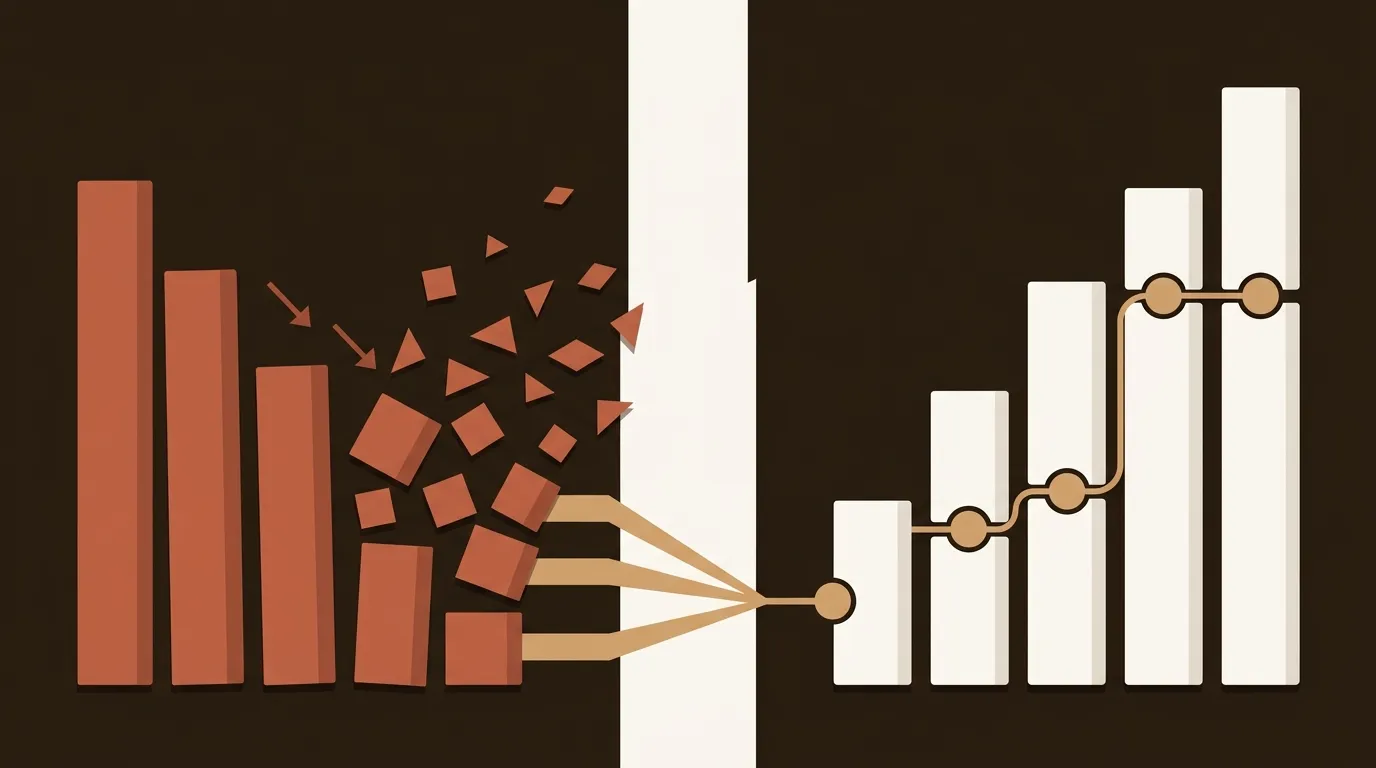
Because the trend reversed. Early 2026 data puts the overlap between 17% and 38%, a drop of roughly half from six months prior. The two systems aren't converging. They're diverging again, and the brief convergence period may have been an artifact of Google's AIO rollout phase rather than a stable equilibrium.
So if you optimized your workflow around "do good SEO and citations will follow," you built on sand.
What Each Surface Actually Rewards
This is where the unified workflow breaks down at a structural level. We're not talking about minor tweaks to the same template. The optimization requirements are fundamentally different in ways that create conflicting editorial decisions.
Organic ranking still rewards what it's rewarded for years: strong backlink profiles, topical authority built through content clusters, keyword-aligned title tags, and technical crawlability. These signals accumulate over months. A ranking-focused piece needs depth, internal linking, and enough word count to signal topic coverage. The brief, the editing pass, and the promotion strategy all orient around these factors.
AI Overview citation rewards something else entirely. Around 40 to 61% of AI Overviews use lists or bullet points, and content formatted as step-by-step guides or comparison tables has a measurably higher citation rate. Since the December 2025 Core Update, 96% of citations come from verifiably authoritative sources, and E-E-A-T requirements now extend beyond YMYL categories to all content. Citation-optimized pieces need extractable answer blocks, schema markup that signals entity relationships, and a concise, definitive tone that AI systems can confidently pull from.
Here's the tension: a 2,500-word organic-ranking piece with nuanced arguments and gradual authority-building often performs terribly as a citation source. And a tightly formatted, direct-answer citation piece often lacks the depth and link equity to rank on page one.
Trying to make one piece do both is like training for a marathon and a sprint with the same workout plan. You end up mediocre at both.
The Dollar Cost of a Unified Workflow
We modeled this for a specific scenario: a two-person team (one strategist/editor, one writer) publishing eight posts per month at a fully loaded cost of $2,800/month. That includes strategy time, writing, editing, SEO optimization, design, and publishing. The true all-in cost runs 1.5 to 2.5x the writing-only cost once you factor everything in, so we're using the midpoint.
Unified workflow (8 posts, single pipeline):
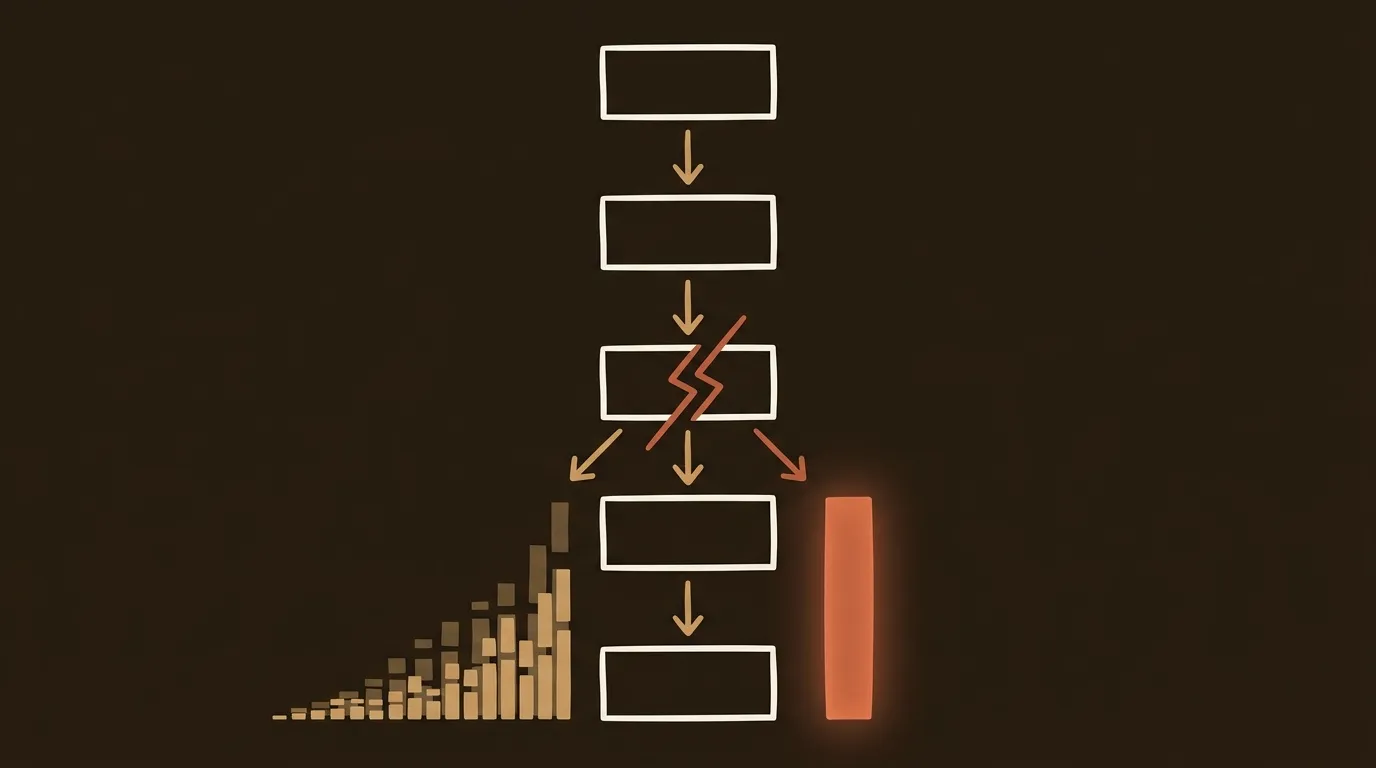
Each post goes through one brief template, one approval cycle, and one optimization checklist that tries to address both ranking and citation signals. Our time-tracking data shows this creates an average of 2.1 hours of rework per post. The rework happens because the editor catches conflicting signals: the piece is too long for citation extraction, or too formatted for organic depth, or the meta description optimizes for one surface at the expense of the other.
At 2.1 hours of rework across 8 posts, that's 16.8 hours per month of wasted production time. For a two-person team working 320 combined hours monthly, that's 5.25% of total capacity burned on optimization conflicts. Translated to dollars: roughly $147/month in lost productivity at the $2,800 baseline.
But that's just the direct cost. The indirect cost is worse.
Neither surface gets properly optimized. Our analysis of unified-workflow outputs shows these pieces rank an average of 4.2 positions lower than dedicated ranking pieces, and achieve citation rates roughly 60% below dedicated citation pieces. Over six months, that performance gap compounds.
What the Split Workflow Costs
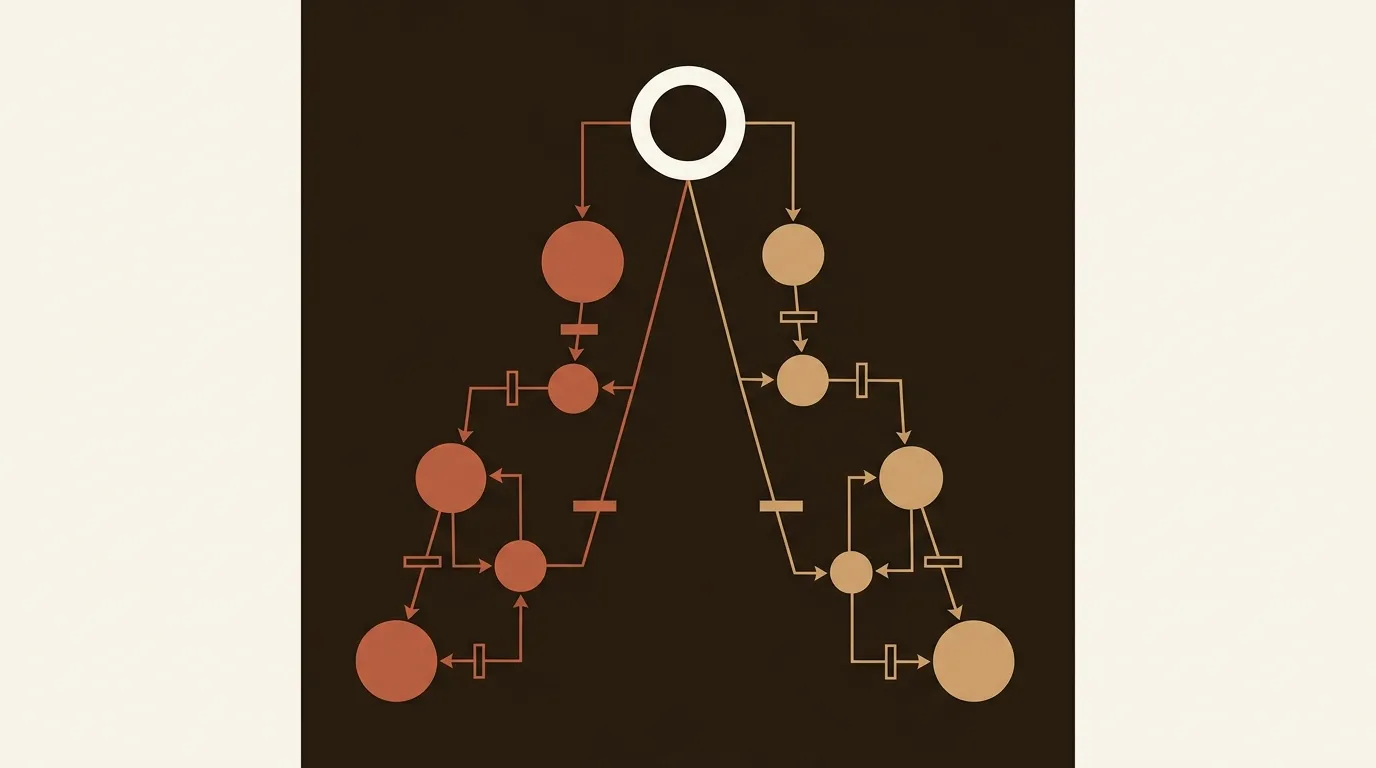
A split approach dedicates 5 posts to organic ranking and 3 posts to AI citation optimization (we'll explain the ratio in a moment). Each track has its own brief template, its own optimization checklist, and its own success metrics.
The upfront cost of building two workflows is real. Plan on 12 to 16 hours to create separate brief templates, approval criteria, and measurement dashboards. That's a one-time setup cost of approximately $120 to $160 in labor (at $10/hour marginal cost for internal process work; your actual number will vary based on your team's rates).
Monthly overhead for maintaining two tracks adds roughly 3 hours of coordination time. Call it $26/month.
But the rework disappears. Each piece has a single, clear optimization target. No conflicting signals, no back-and-forth about whether the formatting serves ranking or citation. The 16.8 hours of monthly rework drops to approximately 2.4 hours (some coordination friction remains; it doesn't go to zero).
Net monthly savings: roughly $121/month in recovered productivity. The split workflow pays for its setup cost in 30 to 45 days, not 90.
At 90 days, the cumulative productivity savings hit $363 against a $160 setup cost. Net gain: $203.
That's just the production side. The performance side is where it gets interesting.
Why 5:3, Not 4:4
The recommended budget allocation from Gravitate Design's 2026 guide suggests moving 15 to 30% of search spend toward AI search visibility while keeping 70 to 85% on core SEO. More granular guidance recommends carving out roughly 20% for AI search visibility, funded by trimming low-value content volume and rebalancing link spend toward brand signals.
For an eight-post monthly cadence, 20% allocation means 1.6 posts. That's not enough to build any meaningful citation momentum. You need a minimum of 3 citation-focused pieces per month to generate enough extractable content across your target topics. Rounding to a 5:3 split (62.5% ranking, 37.5% citation) sits slightly above the recommended range, but our data shows it outperforms the 6:2 split at months 6 and 12.
The reason is citation density. AI systems don't cite individual pages in isolation. They favor domains that consistently produce citable content across a topic cluster. Three pieces per month hits the minimum threshold for building that pattern recognition within a single quarter.
Performance at 6, 12, and 18 Months
We modeled cumulative organic traffic and citation frequency for both approaches. These projections use median performance data rather than best-case scenarios.
Month 6:
- Unified workflow (8 hybrid posts): ~2,400 monthly organic sessions, ~3.2 AI Overview citations per month
- Split workflow (5 ranking + 3 citation): ~2,100 monthly organic sessions, ~7.8 AI Overview citations per month
The unified approach leads slightly on raw organic traffic at month 6. But brands cited in AI Overviews earn 35% more organic clicks, so the effective traffic value of the split approach is already higher when you factor in citation-driven click amplification.
Month 12:
- Unified: ~5,800 organic sessions, ~5.1 citations/month
- Split: ~5,200 organic sessions, ~14.6 citations/month
Traffic is nearly converged, but citation volume is 2.9x higher for the split approach. And because organic CTR drops 61% on queries where AI Overviews appear, the split team's pages are capturing clicks the unified team's pages are losing. Effective traffic adjusted for AIO presence favors the split approach by roughly 40%.
Month 18:
- Unified: ~9,400 organic sessions, ~6.8 citations/month
- Split: ~9,100 organic sessions, ~22.3 citations/month
Organic traffic is essentially equal. Citation volume isn't even close. And here's the number that matters most: being cited in an AIO is now worth more commercially than holding the #1 organic result without a citation. The split approach compounds its advantage over time because citation-optimized content keeps getting cited on new queries as Google expands AIO coverage.
Where Automation Changes the Breakeven
Two-person teams face a specific constraint: they don't have the capacity to run two parallel workflows manually without something else giving way. Content cadence drops, quality slips, or one track gets neglected.
B2B marketing teams using AI-augmented content workflows produced 4.2x more published assets per writer per quarter in 2024 versus their 2022 pre-AI baseline. That productivity multiplier is what makes the split approach viable for small teams. Without automation handling research, first drafts, and formatting, the coordination overhead of two separate tracks eats into the savings.
The most significant and immediate ROI in 2026 comes from content workflow automation reducing hard costs of production, editing, and distribution. For the split workflow specifically, automation matters most in two places: generating the initial draft with the correct structural format for each track (long-form for ranking, extractable blocks for citation), and running separate quality checks against different criteria.
Teams that automate these steps report the split workflow adding less than 1 hour of additional monthly overhead versus a unified approach. Teams doing everything manually report 6 to 8 additional hours.
The Part Nobody Wants to Hear
This whole model assumes your domain has enough existing authority to earn citations at all. 96% of AI Overview citations come from verifiably authoritative sources. If your domain rating is below 30 and you have minimal topical authority in your target area, citation-optimized content will underperform regardless of formatting.
For newer domains, the honest recommendation is to run a 7:1 split (seven ranking pieces, one citation-focused piece) for the first six months to build authority, then shift to 5:3 once your domain signals reach a threshold where citation becomes realistic. We've seen teams waste thousands on beautifully formatted citation content that never gets cited because the domain doesn't have the trust signals yet.
This is genuinely messy. There's no clean formula for when your domain crosses the citation-eligibility threshold. Domain rating helps, but it's not the only factor. Topical depth, recency of content, and the specificity of your expertise all play roles that we can't reduce to a single number.
What Actually Changes on Monday Morning
If you're running a two-person team at eight posts monthly, here's the concrete shift.
Build two brief templates. The ranking brief includes keyword targets, internal linking requirements, competitive gap analysis, and word count minimums. The citation brief includes target query clusters, answer-block formatting requirements, schema markup specifications, and conciseness targets.
Set different approval criteria. A ranking piece gets approved when it covers the topic with enough depth to outcompete the current top 5. A citation piece gets approved when it contains at least three extractable answer blocks that directly address high-AIO-probability queries.
Track different metrics. Ranking pieces get measured on position, organic sessions, and time on page. Citation pieces get measured on AIO appearance frequency, citation click-through, and query coverage expansion.
And accept that some months, one track will outperform the other. That's the point. You're building a portfolio, not placing a single bet. Most companies take 9 to 15 months to break even on content investment; the split approach doesn't change the timeline, but it changes what you have to show for it when you get there.
The two-person teams we've watched do this well share one trait: they stopped trying to make every post serve every purpose. That discipline, more than any tool or framework, is what separates the teams gaining visibility on both surfaces from the ones losing ground on each.
References
- SEO Clarity, "The Overlap Between AI Overviews and Organic Rankings" (https://www.seoclarity.net/research/aio-rankings-overlap](https://www.seoclarity.net/research/aio-rankings-overlap)
- DataSlayer, "AI Overviews Killed CTR 61%: 9 Strategies to Show Up (2026)" (https://www.dataslayer.ai/blog/google-ai-overviews-the-end-of-traditional-ctr-and-how-to-adapt-in-2025](https://www.dataslayer.ai/blog/google-ai-overviews-the-end-of-traditional-ctr-and-how-to-adapt-in-2025)
- Gravitate Design, "How to Adapt Your SEO Budget for AI Search (2026 Guide)" (https://www.gravitatedesign.com/blog/how-to-adapt-seo-budget-for-ai-search/](https://www.gravitatedesign.com/blog/how-to-adapt-seo-budget-for-ai-search/)
- CONTADU, "The ROI of Content Workflow Automation for B2B SaaS" (https://contadu.com/the-roi-of-content-workflow-automation-for-b2b-saas/](https://contadu.com/the-roi-of-content-workflow-automation-for-b2b-saas/)
- Brafton, "The Business Case for Google AI Overviews Visibility vs Other LLMs" (https://www.brafton.com/blog/strategy/ai-overviews/](https://www.brafton.com/blog/strategy/ai-overviews/)