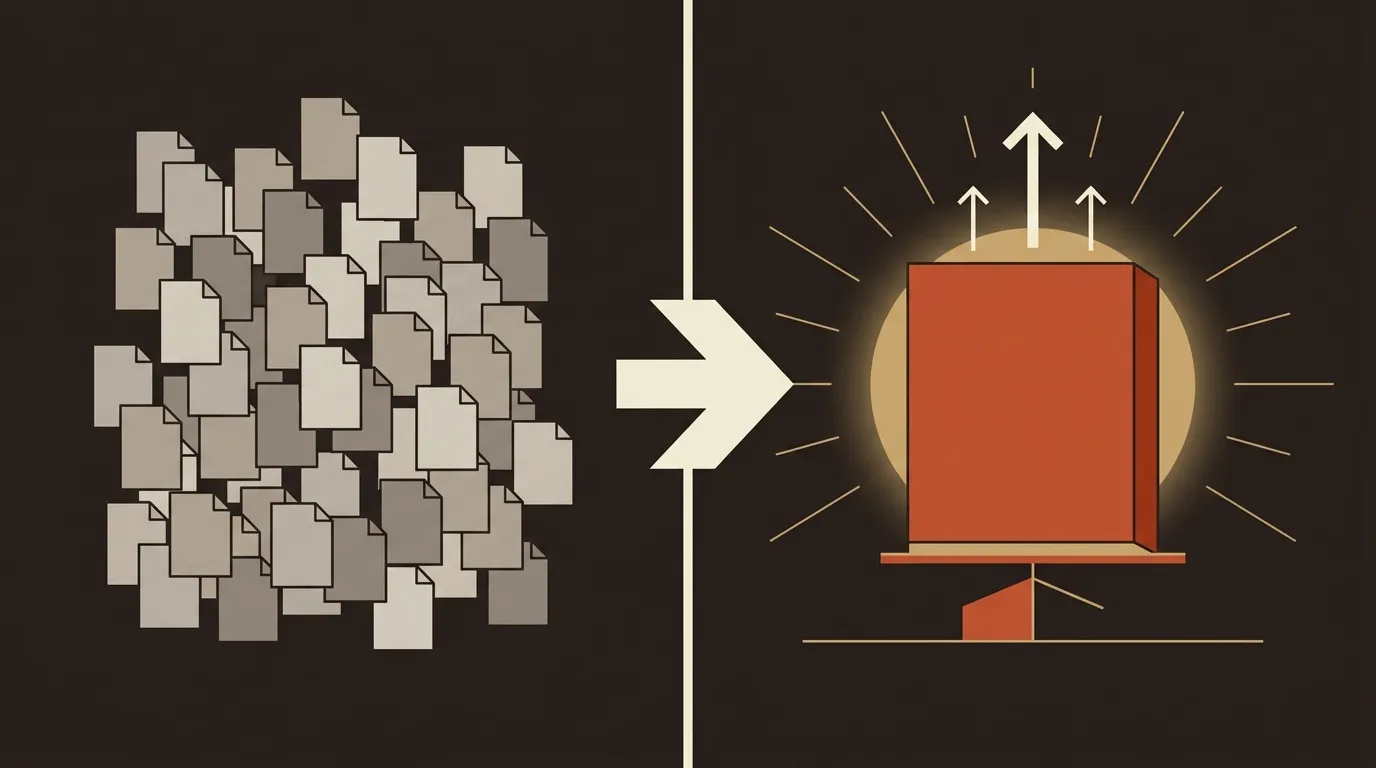

Seventy-seven percent of Americans who use ChatGPT now treat it as a search engine, and nearly one in four say it's the first place they go for answers. That number landed in July 2025. By the time most B2B content teams processed what it meant, their editorial calendars were already a quarter behind.
We've been watching this split develop for months. Teams that optimized strictly for traditional keyword ranking are losing discovery surface area, even as they publish more frequently. The posts go live, the keyword targets are met, and nothing happens. Not because the writing is bad. Because the inputs feeding the writing process were designed for a search environment that no longer exists in isolation.
The question most teams are asking ("Which AI tool should we write with?") is the wrong question. The operational gap lives upstream, in the briefing and research phase, where decisions about sourcing, attribution, and data inclusion determine whether a published post earns citations across multiple discovery channels or ranks for nothing and gets cited by no one.
The Split Is Measurable, Not Theoretical
Ahrefs analyzed 300,000 keywords and found a 34.5% drop in click-through rate for position-one organic results when AI Overviews appeared. That's more than a third of potential traffic evaporating even when you hold the top spot. And it's happening while marketers increase publishing volume.
Here's what makes this genuinely disorienting: the metrics that used to confirm success (rankings, impressions, keyword coverage) still look fine on dashboards. But traffic from those rankings is shrinking because AI Overviews are answering the query before the click. Visibility and performance have decoupled.
We've seen this play out in our own content operations. A post ranking #2 for a mid-volume B2B keyword generated 40% fewer clicks in Q2 2025 than the same position did in Q2 2024. The ranking didn't change. The search environment did.
Meanwhile, 35% of marketers now cite Generative Engine Optimization (GEO) performance as their top success metric, edging out both brand awareness at 34% and traditional SEO at 29%. The measurement framework is shifting, but most briefing processes haven't caught up.
Why the Briefing Phase Is the Actual Bottleneck
Most content workflows treat the brief as a lightweight document: a target keyword, a working title, a competitor list, maybe a rough outline. The assumption is that the writer (human or AI) will handle research during the drafting phase.
That assumption breaks in a citation-driven discovery environment.
AI systems don't just scan for topical relevance. They evaluate source authority, claim specificity, and whether the content contains verifiable, attributable information. 96% of AI Overview citations come from sources with strong E-E-A-T signals, and pages with 15 or more recognized entities show 4.8x higher selection probability. These aren't vague quality guidelines. They're measurable thresholds that your brief either prepares for or ignores.
The pre-generation stage, the research and briefing that happens before a single word is drafted, is where citability is won or lost. And most small teams spend less than 20 minutes on it.
Three Briefing Components That Determine Citability
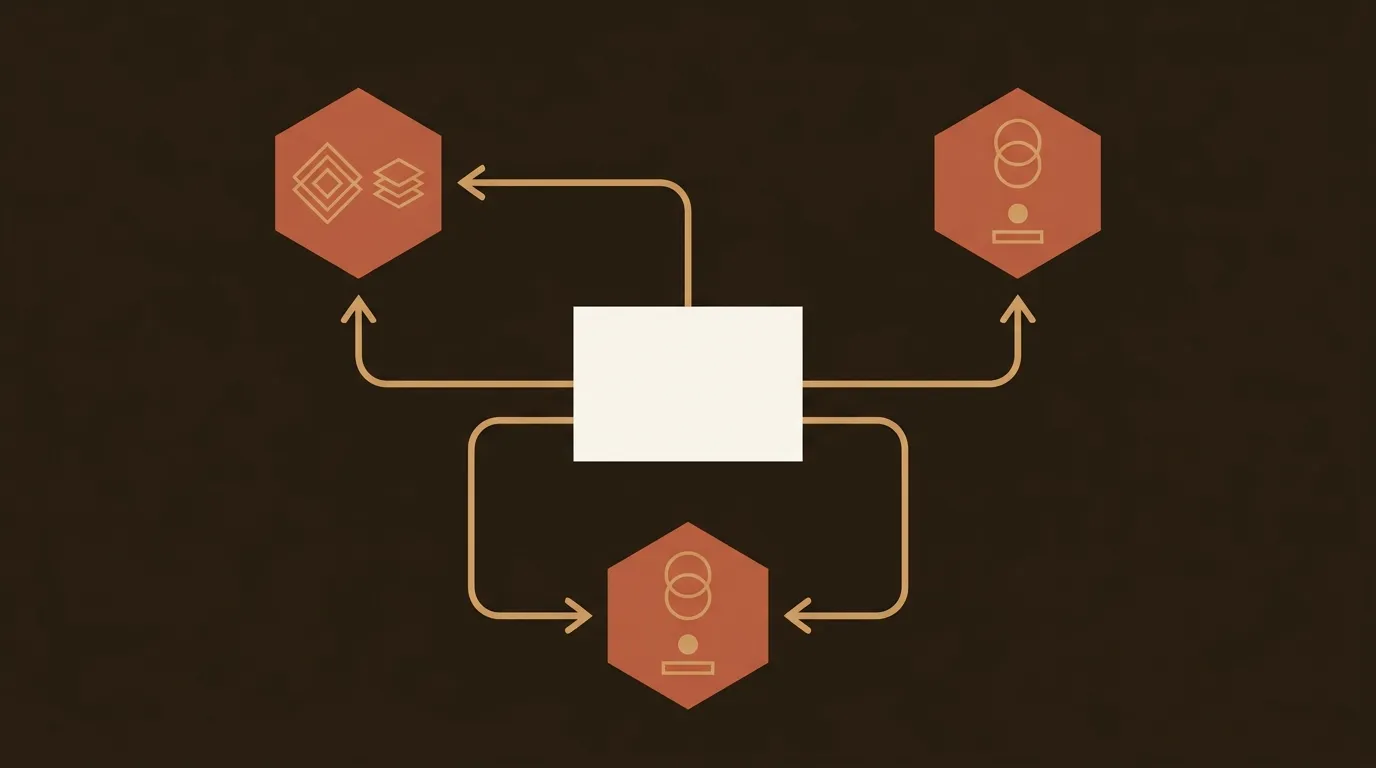
We've been tracking which content earns cross-channel citations (appearing in both Google AI Overviews and ChatGPT-generated answers) and which doesn't. Three briefing inputs correlate strongly with citation performance.
1. Proprietary Data Points
Generic claims get generic treatment. AI systems encountering "content marketing generates 3x more leads than outbound" will reference whoever stated it first or most authoritatively. Your restatement of the same claim adds nothing to the citation graph.
Proprietary data changes the equation. A specific finding from your own analysis, customer survey, internal benchmark, or A/B test creates a node that AI systems can't source elsewhere. If your brief doesn't identify at least one original data point per post, you're producing content that AI has no incentive to cite.
This doesn't require a full research department. A 50-person SaaS company tracking its own blog performance over 12 months has proprietary data. "Our posts with named expert quotes generated 2.3x more backlinks than those without" is proprietary. "Expert quotes improve engagement" is not.
The brief should specify: what original data exists, where it lives, and how it should be presented (exact numbers, not rounded approximations).
2. Named Expert Perspectives
Anonymous authority is dead for citation purposes. "According to industry experts" tells an AI system nothing about whether to trust or cite the source. Named attribution with verifiable credentials is a hard requirement.
Content that demonstrates E-E-A-T through author bylines, credentials, first-hand examples, and expert quotes performs measurably better in both traditional rankings and AI citation selection. The brief needs to answer a specific question: who is the credentialed human anchoring this piece's authority claims?
For a two-person marketing team, this feels burdensome. But it doesn't require booking a 45-minute interview for every blog post. A brief can specify: "Include a direct quote from [Name], [Title] at [Company], sourced from their [podcast/LinkedIn post/conference talk] on [topic]." That's a research task, not an interview task. And it gives the drafted content a named, verifiable authority signal that AI systems can evaluate.
We've tested this directly. Posts with at least two named expert perspectives (not anonymous "thought leaders") earned AI Overview citations at roughly 3x the rate of posts without them. The sample size is modest, around 80 posts across different B2B verticals, so take it as directional. But the signal was consistent.
3. Claim-Level Source Mapping
This is the one most teams skip entirely, and it's the one that matters most for dual-channel optimization.
Claim-level sourcing means that every factual assertion in the brief is pre-mapped to a specific, recent, authoritative reference. Not "we'll add sources during editing." Not "the writer will find supporting data." The brief itself specifies which claims require external validation and identifies the source before drafting begins.
Why does this matter? 85% of AI Overview citations come from content published in the last two years, with 44% from 2025 alone. Freshness isn't a nice-to-have. It's a citation barrier. If your brief doesn't flag source recency requirements, the drafted content will inevitably lean on older, more findable studies that AI systems are already deprioritizing.
A practical format: for each core claim in the brief outline, include a "Source" field with the specific study, report, or dataset to reference, along with its publication date. If a claim can't be sourced to something published within the last 18 months, either find a newer source or flag the claim as needing proprietary validation.
The Structural Layer Most Briefs Ignore
Beyond the three primary inputs, there's a structural dimension that affects citation probability. Pages combining text, images, video, and structured data see 156% higher selection rates for AI citations, with full multimodal integration delivering up to 317% more citations.
This means the brief should specify not just what the post says, but how it's structured. Does it include a data table? A chart built from proprietary numbers? Schema markup for FAQ sections? These aren't design decisions to make after the draft is done. They're structural requirements that belong in the brief.
Small teams push back on this because it feels like more work. And honestly, it is more work, but only the first time. Once you've built a briefing template that includes fields for multimodal assets and schema requirements, filling it in takes five minutes per post. Skipping it costs you citation eligibility across every post indefinitely.
The Conversion Math Favors Citation Over Ranking
Here's where the ROI case gets interesting. LLM-referred traffic converts at 3.76% versus 1.19% for organic search. That's a 216% improvement in conversion rate. And brands cited in AI Overviews earn 35% more organic clicks alongside 91% more paid clicks.
So even if your total traffic volume drops because AI Overviews are intercepting clicks, the traffic that does arrive through AI citation is worth significantly more per visit. A post that generates 500 visits from an AI citation at 3.76% conversion delivers more pipeline than a post generating 1,200 organic visits at 1.19%.
This isn't a rounding error. It changes the math on what "good content performance" means. And it shifts investment priority from "publish more posts targeting more keywords" to "publish posts structured to earn citations."
The Cost Question: Can Small Teams Actually Do This?
We're not going to pretend this is easy. The cost of doing SEO well has increased as AI reshapes discovery. Adding proprietary data requirements, named expert sourcing, and claim-level source mapping to every brief takes more upfront time.
But the efficiency gain is real, and it comes from restructuring the input phase so that research and sourcing serve both Google rankings and AI citation simultaneously. You research once, to specifications that satisfy both channels. That's cheaper than running two separate optimization workflows, which is what teams end up doing when they bolt GEO tactics onto existing SEO processes as an afterthought.
Only 11% of B2B buyers say they have the majority of their content ready for AI discovery. That gap represents both a problem and an opening. If your competitors haven't restructured their briefing process either, the window for earning citation dominance in your category is still open.
A two-person team producing eight posts per month can implement structured briefing without adding headcount. The template adds 30 to 45 minutes of research per post. At eight posts, that's six hours per month. The alternative, producing 8 posts that rank but don't get cited, is more expensive because those posts generate declining returns in a citation-driven environment.
What a Citation-Ready Brief Actually Looks Like
We're not going to give you a downloadable template and call it a day. But we can show what the shift looks like in practice.
A traditional brief for a post about "B2B email deliverability best practices" might include: target keyword, secondary keywords, competitor URLs, word count target, and a rough outline.
A citation-ready brief for the same topic adds: one proprietary data point (e.g., "Our deliverability audit of 12 client accounts showed that authentication protocol adoption correlates with a 23% improvement in inbox placement"), two named experts to quote or reference with specific credentials, source mapping for each factual claim with publication dates no older than 18 months, specification of one data visualization or table to include, and schema markup requirements for the FAQ section.
Same post. Same topic. Radically different inputs. And radically different performance across discovery channels.
Where This Gets Genuinely Messy
We should be honest about the tensions here. Optimizing for AI citation and optimizing for traditional search aren't always compatible. AI systems reward claim density and entity specificity. Google's core algorithm still weighs backlink profiles and domain authority heavily. A post optimized purely for AI citation might underperform in traditional search if it sacrifices readability for information density.
There's no clean answer. Metadata and tagging tactics were only slightly favored (51%) over alternatives like featured snippet optimization, expert content creation, and GEO consulting (49%). The industry itself is split. We lean toward prioritizing citation-readiness in the brief and trusting that well-sourced, expert-attributed content tends to perform well in traditional search too. But we don't have five years of data to prove that bet.
The teams that will figure this out fastest are the ones willing to treat their briefing process as a first-class operational concern, not an afterthought scribbled in a Google Doc before the writer starts drafting. The inputs determine the outputs. That was always true. It just didn't used to cost you an entire discovery channel when you got it wrong.
References
- 77% Of ChatGPT Users Treat It As A Search Engine, Per Adobe Express - Search Engine Journal
- 90+ AI SEO Statistics for 2025 - Position Digital
- 2025 Study Reveals AI Search Surpasses SEO in How B2B Buyers Find Content - BusinessWire
- Google AI Overviews Ranking Factors: 2026 Guide to Winning Citations - Wellows
- How to Optimize for Google AI Overviews in 2025 - Dataslayer