Most B2B content teams spent the last two years optimizing for one thing: Google's AI Overviews. That bet made sense when Google controlled 90%+ of search. It makes less sense now that ChatGPT processes over 2.5 billion queries per day and Perplexity's monthly query volume has grown 239% since August 2024. The citation surface isn't one platform anymore. It's three, each running different retrieval logic, and small teams can't afford to build three separate content workflows.
So the question shifts from "how do we rank in AI Overviews?" to something harder: how do you structure one piece of content so it gets cited across Google AI Overviews, ChatGPT search, and Perplexity simultaneously, without tripling your production budget?
We've been working through this problem ourselves. Here's what the data says, and what we've learned about making it operational.
Three Platforms, Three Different Definitions of "Good Content"
The friction starts with a basic mismatch. Each AI search platform evaluates and retrieves content differently. What earns a citation on Google may get ignored by ChatGPT, and Perplexity has its own set of preferences entirely.
Google AI Overviews lean heavily on semantic completeness and existing organic authority. Content scoring 8.5/10+ on semantic completeness is 4.2x more likely to be cited, with passages of 134 to 167 words performing best as self-contained answer units. And 74% of AI Overview citations come from pages already ranking in the top 10 organic results. Translation: if you're not ranking traditionally, Google's AI probably isn't pulling from you either.
ChatGPT search favors a different signal mix. It shows strong preference for authoritative, encyclopedic content, but freshness matters more than you'd expect. 76.4% of ChatGPT's most-cited pages were updated within the last 30 days. And here's one that surprised us: first-person writing combined with a clear author byline yields a 1.67x citation improvement. ChatGPT appears to reward content that signals accountability and direct expertise.
Perplexity operates on yet another axis. Its ranking factors include source trustworthiness, semantic clarity, E-E-A-T alignment, and technical crawlability. But it also has an unusual velocity requirement: within the first 30 minutes of indexing, new content needs at least 1,000 impressions and a 4.2%+ click-through rate to qualify for top rankings. That's a distribution problem most content teams aren't even thinking about.
The takeaway is blunt. A piece optimized purely for Google AI Overviews misses the structural preferences of two platforms that are growing faster than Google search itself. ChatGPT now commands 17% of queries and poses the greatest threat to Google's market dominance in over 20 years.
The Winner-Take-Most Problem
Before we get into structure, a reality check on distribution. Citation traffic across AI platforms is concentrated, not evenly distributed.
64% of all ChatGPT referrals land on just 120 domains. That's an extreme power law. If you're not already in that club, earning ChatGPT citations requires a deliberate structural approach, not just good writing.
Google AI Overviews show a similar concentration pattern through their preference for top-10 organic results. And Perplexity's velocity requirements create a fresh-content bias that favors publishers with existing distribution channels (email lists, social following, syndication networks).
This concentration is genuinely messy. There's no single hack that cracks all three platforms. But there is a structural approach that improves your odds on each without requiring three separate production pipelines.
One Piece, Three Extraction Patterns
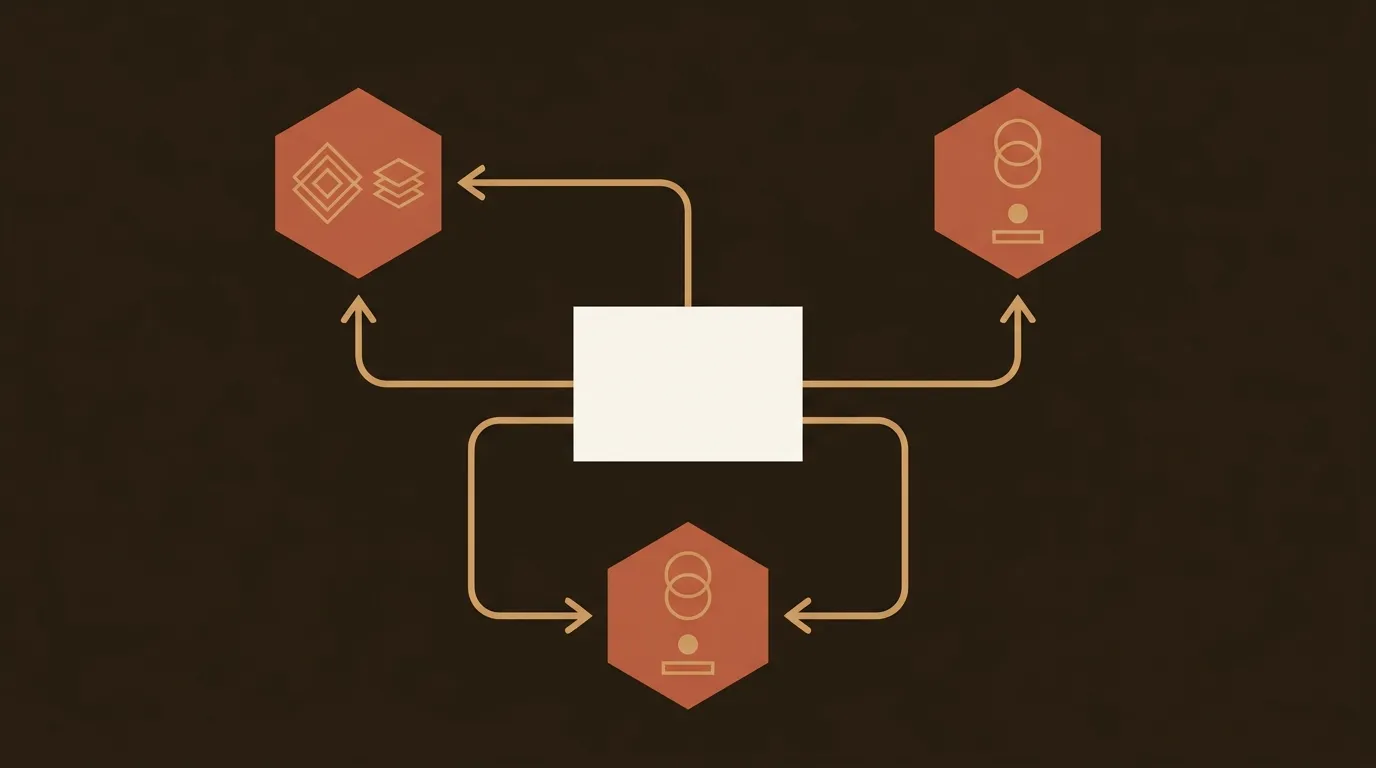
We've been testing a content architecture that treats each piece as a single asset designed for cross-platform extractability. The goal: write once, structure for three.
Lead With the Answer, Not the Setup
All three platforms prefer content that puts the direct answer early. Content placing direct answers in the first 40 to 60 words achieves significantly higher citation rates across platforms. Research from multiple sources shows answer-first content was 40% more likely to be rephrased by AI tools.
This is the opposite of how most B2B blog posts are written. The typical pattern is 200 words of context, then the answer buried in paragraph four. For AI citation purposes, that structure is a liability.
We've started inverting our posts. The opening paragraph states the conclusion. The rest of the piece supports it. It feels counterintuitive if you were trained on traditional content marketing frameworks, but the data is clear.
Self-Contained Answer Blocks
Google AI Overviews extract passages of 134 to 167 words that fully answer a query. ChatGPT pulls from sections that read as authoritative standalone summaries. Perplexity favors clearly delineated sections with high semantic clarity.
The common thread: each section of your content should be able to stand alone as a complete answer. If a reader (or an AI retrieval system) lands on paragraph six with no context from paragraphs one through five, does it still make sense? If yes, you've built an extractable piece.
This means more subheadings, shorter sections, and each section opening with its own mini-thesis. Not because it's "good formatting," but because it creates more extraction surfaces.
Author Credentialing Isn't Optional Anymore
This one is specifically driven by ChatGPT's retrieval preferences. First-person perspective with a visible author byline and credentials signals accountability. The 1.67x citation improvement is significant enough that skipping it is leaving citations on the table.
But it also helps with Perplexity's E-E-A-T alignment and Google's broader authority signals. An author page with clear expertise markers, linked from the byline, serves all three platforms with a single structural decision.
FAQ Sections Do Triple Duty
Around 40 to 61% of AI Overviews use lists or bullet points. Content formatted as clear questions with concise answers (40 words per answer) performs well on Google, gives ChatGPT discrete citation targets, and matches Perplexity's preference for extractable passages.
We add FAQ sections to the bottom of our posts now. Not the generic "What is X?" variety. Instead, we pull actual questions from search console data and answer them directly. Each FAQ item becomes a miniature citation target across all three platforms.
Schema Markup: The Technical Multiplier
Properly structured content with schema markup shows 73% higher selection rates for AI citations compared to unmarked content. FAQPage, HowTo, Article, and Organization schema types are the ones that matter most.
This is a one-time implementation cost per template. Once your blog template includes the right schema structure, every new post benefits automatically. For small teams, this is the highest-ROI technical investment in the entire stack.
The Freshness Tax: Where Costs Actually Compound
Here's where the math gets uncomfortable. Each platform has a different freshness expectation.
Google AI Overviews are relatively forgiving. A quarterly refresh cadence keeps most content competitive. ChatGPT prefers pages updated within the last 30 days. And Perplexity? Content should be refreshed every 2 to 3 days to prevent decay and maintain high visibility.
That last number is aggressive. For a small team managing 50+ blog posts, refreshing every 2 to 3 days per piece isn't realistic. But not every piece needs Perplexity optimization. The practical approach: pick your top 5 to 10 revenue-driving pages for aggressive refresh cycles (weekly, targeting Perplexity), maintain monthly updates on your next 20 pages (targeting ChatGPT), and do quarterly deep refreshes across the full catalog (targeting Google).
This tiered approach keeps the freshness tax manageable without abandoning any platform entirely.
Measuring Return Per Citation Dollar
Traditional organic CTR is a less useful metric now. AI citations often satisfy the user's query without a click. But cited pages still earn 35% more organic clicks and 91% more paid clicks than competitors that aren't cited. The value is real, just harder to attribute.
We've been tracking four metrics across platforms:
Citation frequency by query type. Not all citations are equal. A citation on a high-intent commercial query is worth 10x a citation on an informational query.
Conversion quality by source. Referral traffic from Perplexity citations converts at 14.2% versus Google's 2.8%. That's a 5x quality multiplier. Perplexity sends less traffic in absolute terms, but the traffic it sends converts at extraordinary rates.
Speed to citation. Perplexity citations are achievable within hours of publication. Google citations take weeks. ChatGPT falls somewhere in between. For time-sensitive content (product launches, trend pieces), platform-specific timing matters.
Brand mention velocity. ChatGPT sometimes mentions brands without linking. Those mentions still trigger branded searches downstream. We track these as a leading indicator.
A Practical 12-Week Rollout
We won't pretend this is simple. But we've found a phased approach keeps it manageable for teams of one to three people.
Weeks 1 through 4: Audit your top 20 revenue-driving posts. Restructure each for semantic completeness (Google), author credentialing (ChatGPT), and extractability (Perplexity). Add FAQ sections. Implement schema markup on your blog template.
Weeks 5 through 8: Launch tiered refresh cycles. Weekly updates on your top 5 Perplexity targets. Monthly freshness passes on your next 20. Start tracking citation frequency and conversion quality by platform.
Weeks 9 through 12: Optimize based on data. Which pieces earn citations on multiple platforms? Which only work on one? Reallocate refresh effort toward cross-platform performers.
The total additional production cost, assuming you're already creating the content, is roughly 15 to 20% more time per piece for structural optimization. The refresh cycles add ongoing maintenance, but the tiered approach keeps it proportional to the value each piece generates.
What Happens If You Wait
Industry analysts predict AI search visitors will surpass traditional search visitors by early 2028. That timeline could accelerate if Google makes AI Mode its default search experience.
Citation authority compounds over time. Pages that are already being cited by AI platforms build stronger signals for future citations. Pages that aren't cited fall further behind. The gap between early movers and late adopters will widen, not narrow.
And yet, 97% of SEO professionals report being unprepared for AI search. Which means the window for small teams to establish cross-platform citation authority, before larger competitors figure this out, is still open. Probably not for long.
References
- First Page Sage, "Google vs ChatGPT Market Share: 2026 Report" -- https://firstpagesage.com/seo-blog/google-vs-chatgpt-market-share-report/
- DemandSage, "ChatGPT Statistics (2026) - Active Users & Growth Data" -- https://www.demandsage.com/chatgpt-statistics/
- The Digital Bloom, "Google AI Overviews 2025: Top Cited Domains & Traffic Shifts" -- https://thedigitalbloom.com/learn/google-ai-overviews-top-cited-domains-2025/
- Wellows, "Google AI Overviews Ranking Factors: 2026 Guide to Winning Citations" -- https://wellows.com/blog/google-ai-overviews-ranking-factors/
- Search Engine Land, "How Perplexity ranks content: Research uncovers core ranking factors and systems" -- https://searchengineland.com/how-perplexity-ranks-content-research-460031